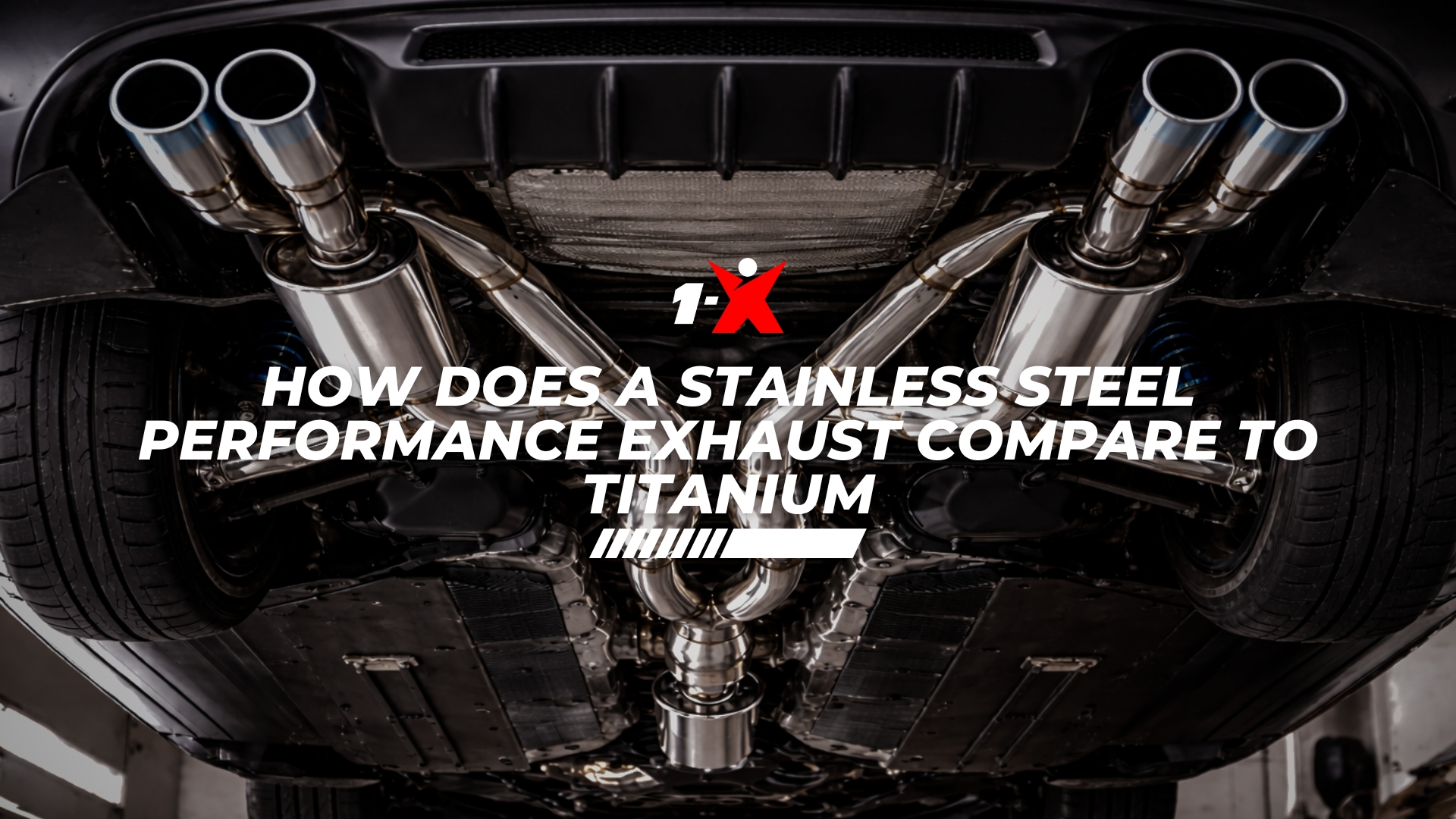
How Does a Stainless Steel Performance Exhaust Compare to Titanium
How Does a Stainless Steel Performance Exhaust Compare to Titanium And Why Stainless Steel Is the Preferred Choice at 1Exhaust When choosing a performance exhaust, the material matters just as much as the design. Stainless steel and titanium are the two most discussed options, but while titanium gets attention for its lightweight appeal, stainless steel remains the smarter and more reliable choice for most performance vehicles. At 1Exhaust, the focus is on real-world performance, longevity, and sound quality. That is why stainless steel is the material of choice across our systems. Understanding Performance Exhaust Materials Both stainless steel and titanium are used because they outperform mild steel in heat resistance and corrosion protection. The real difference lies in how they perform over time and how suitable they are for everyday driving conditions. Stainless Steel Performance Exhausts Built for Real World Performance Stainless steel offers an ideal balance of strength, durability, and acoustic control. High-grade stainless steel, such as 304 stainless, resists corrosion and maintains its structural integrity through constant heat cycles and daily use. From a performance standpoint, stainless steel maintains consistent exhaust flow while preserving reliability under high temperatures. It does not fatigue easily, making it ideal for vehicles that see frequent driving, spirited use, or long-term ownership. Sound quality is another major advantage. Stainless steel produces a deep, refined exhaust tone without harsh resonance or metallic rasp. This balance is essential for performance vehicles that are driven daily. Titanium Exhausts Lightweight but Less Forgiving Titanium is known for its low weight and motorsport appeal. In competitive racing, reducing weight wherever possible makes sense. However, for street-driven vehicles, titanium introduces trade-offs. It is significantly more expensive to manufacture and repair, and it is more prone to cracking over time when exposed to vibration and repeated thermal cycles. Titanium exhausts also tend to produce a sharper, higher-pitched sound profile, which can become fatiguing during daily driving or highway use. Durability and Long Term Reliability Stainless steel excels in long-term durability. It withstands moisture, road debris, and harsh weather without compromising performance. Titanium, while strong for its weight, is far less forgiving in real-world conditions. Repairs are costly and often impractical, making stainless steel the safer investment for most drivers. Performance Differences in Practice Weight savings aside, performance differences between stainless steel and titanium exhausts are minimal in real-world use. Power gains depend far more on exhaust design, diameter, and tuning than on material alone. A well-engineered stainless steel exhaust will consistently deliver reliable performance and sound quality without unnecessary compromises. Cost Versus Value Stainless steel offers superior value. It delivers durability, sound quality, and long-term reliability at a more accessible price point. For most drivers, the additional cost of titanium does not translate into meaningful performance gains. That is why 1Exhaust prioritises stainless steel systems that deliver measurable benefits where it matters. Which Material Is Right for You If your vehicle is a dedicated track build where every kilogram counts, titanium may be worth considering. For daily-driven performance cars, enthusiast builds, and long-term ownership, stainless steel is the better choice. This is why 1Exhaust continues to develop stainless steel exhaust systems that balance performance, sound, and reliability. Final Thoughts Titanium may look impressive on paper, but stainless steel delivers where it counts. At 1Exhaust, stainless steel performance exhausts are chosen for their durability, refined sound, and consistent performance. For drivers who demand an exhaust they can rely on every day, stainless steel remains the proven solution.
How Does a Stainless Steel Performance Exhaust Compare to Titanium Read More »