
If you have already upgraded your exhaust or you are researching performance modifications for a turbocharged vehicle, the downpipe is one of the components that keeps coming up. It is not as widely discussed as a cat-back system but among people who understand how a turbocharged engine works, it is recognised as one of the single most effective performance upgrades available for a forced-induction vehicle.
This guide explains exactly what a turbo downpipe is, what upgrading it actually does, which vehicles in South Africa benefit most, what to look for when buying one, and how it fits into a broader exhaust upgrade plan.
What Is a Turbo Downpipe?
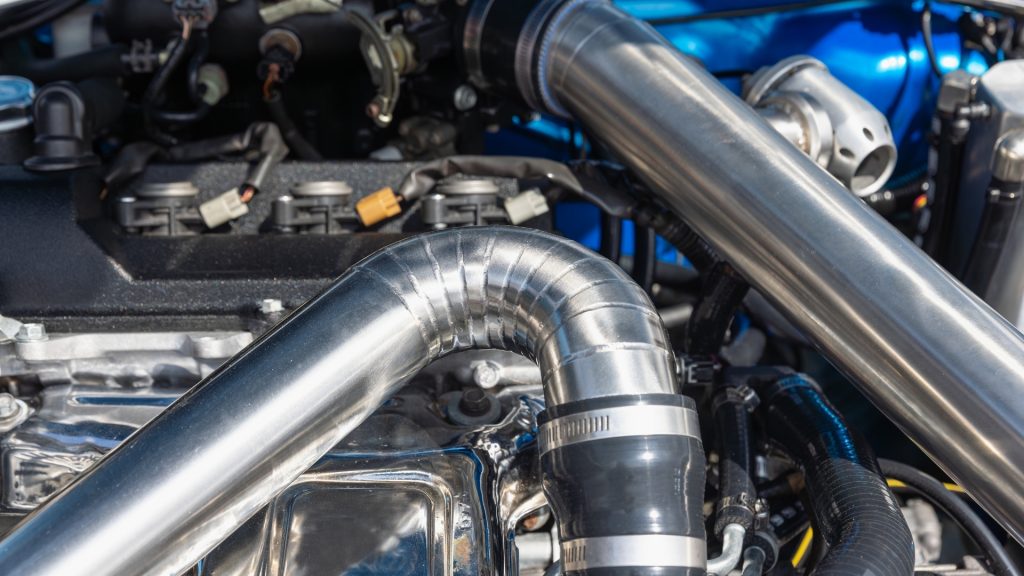
The downpipe is the section of exhaust pipe that connects directly to the outlet of the turbocharger. When the turbocharger compresses air and forces it into the engine, exhaust gases are expelled through the turbine housing and exit via the downpipe on their way through the rest of the exhaust system.
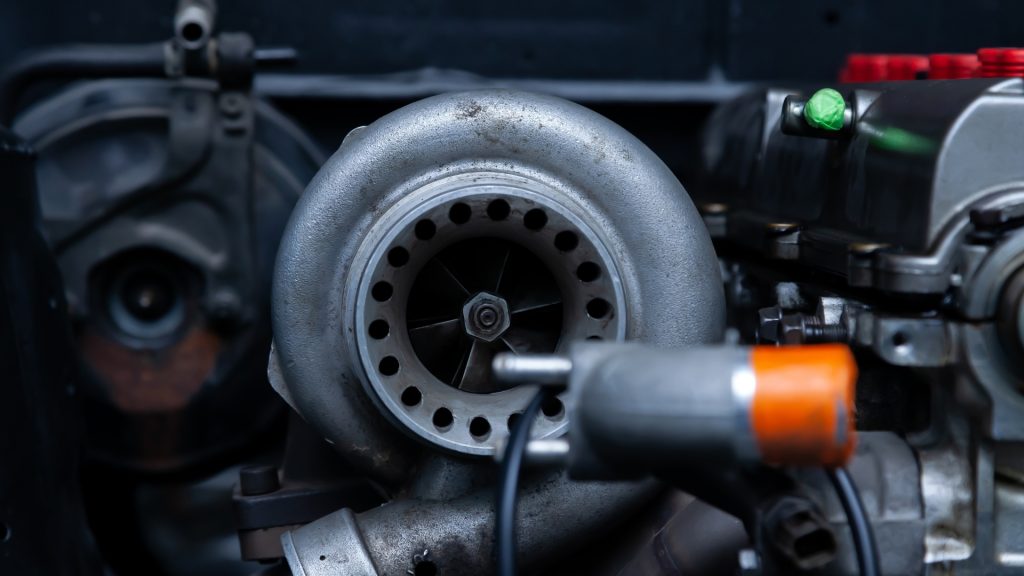
Because the downpipe is the first point of exhaust exit from the turbocharger, it has a direct and significant influence on how efficiently the turbo operates. A restrictive downpipe creates back pressure at the turbo outlet, which forces the turbocharger to work harder to expel exhaust gases, increases heat in the turbine housing, slows turbo spool, and reduces the overall efficiency of the forced induction system.
A performance downpipe replaces the factory unit with a larger diameter, less restrictive pipe that allows exhaust gases to exit the turbocharger more freely. The result is faster turbo spool, reduced heat, better throttle response, and in most cases a meaningful improvement in power and torque in the mid-range where turbocharged engines do most of their work.
Downpipe vs Cat-Back: What Is the Difference?
This is one of the most common questions people ask when they start researching exhaust upgrades for a turbocharged vehicle, and understanding the difference between the two helps you plan your upgrade in the right order.
A cat-back exhaust system replaces everything from the catalytic converter to the tailpipe. It improves exhaust flow through the rear section of the system and delivers clear improvements in sound, performance, and fuel efficiency. It is the most popular exhaust upgrade in South Africa because it is road-legal, straightforward to fit, and delivers noticeable results on almost any turbocharged vehicle.
A downpipe upgrade replaces the section between the turbocharger and the catalytic converter. It operates closer to the source of exhaust flow and has a more direct influence on turbocharger performance than a cat-back system. For turbocharged vehicles where maximum performance is the goal, a downpipe upgrade and a cat-back system work together to create a complete, free-flowing exhaust path from the turbo outlet to the tailpipe.
If you are working to a budget, a cat-back system is generally the better first upgrade because it delivers broad improvements across sound, performance, and efficiency. A downpipe upgrade as a second stage, once the cat-back is in place, completes the system and extracts the remaining performance that the cat-back alone cannot reach.
You can browse the full 1Exhaust performance systems range to see the cat-back options available for your vehicle before deciding on a combined upgrade plan.
What Does a Downpipe Upgrade Actually Do?
The performance benefits of a downpipe upgrade are most pronounced on turbocharged engines, which covers the vast majority of modern South African bakkies and performance cars.
Turbo spool time improves because the turbocharger can expel exhaust gases more easily. Less back pressure at the turbo outlet means the turbine spins up to operating speed faster, which reduces the lag you feel between pressing the accelerator and feeling the full power arrive. On vehicles where turbo lag is a noticeable characteristic, a downpipe upgrade is one of the most direct ways to address it.
Mid-range power and torque increase because the engine is able to breathe more efficiently across the rev range. This is the power band where most South African driving happens, whether you are overtaking on a national road, pulling a trailer through a mountain pass, or managing load on a dirt road. The improvement is not always dramatic on a stock engine but it is consistent and real, and it compounds significantly when combined with other engine modifications.
Exhaust gas temperatures reduce because gases spend less time building up heat at the turbo outlet. Lower exhaust gas temperatures are beneficial for turbocharger longevity and for the overall thermal management of the engine bay, particularly on vehicles that are worked hard under load.
Sound changes modestly with a downpipe upgrade, though less dramatically than a silencer or cat-back replacement. The improvement in turbo noise and the sharpening of the exhaust note under acceleration is noticeable but the primary purpose of a downpipe upgrade is performance rather than sound.
Catted vs Catless Downpipes: What You Need to Know
This is one of the most important decisions to make when choosing a downpipe upgrade, and it has implications for both performance and legal compliance in South Africa.
A catted downpipe retains a catalytic converter in the downpipe assembly, either using the factory cat or replacing it with a high-flow sports catalyst. A high-flow cat allows significantly more exhaust flow than the restrictive factory unit while still providing emissions control and maintaining road legality. For daily-driven vehicles in South Africa, a high-flow catted downpipe is the correct choice. It delivers meaningful performance improvements without the emissions and legal complications that come with removing the catalytic converter entirely.
A catless downpipe removes the catalytic converter from the system entirely. This produces the maximum possible exhaust flow and the largest performance gains but it also means the vehicle will fail an emissions test and is technically not road-legal for public road use in South Africa. Catless downpipes are most appropriate for dedicated track vehicles or off-road competition builds where emissions compliance is not a requirement.
For the overwhelming majority of South African drivers, a high-flow catted downpipe from 1Exhaust delivers the performance improvement you are looking for while keeping the vehicle compliant and usable on public roads.
Which South African Vehicles Benefit Most from a Downpipe Upgrade?
The gains from a downpipe upgrade are directly proportional to how much the factory downpipe restricts exhaust flow, which varies by vehicle. Some factory units are significantly more restrictive than others, and the vehicles where the improvement is most noticeable are well documented in the South African performance community.
Toyota Hilux GD6 2.8
The GD6 engine is one of the most widely modified turbodiesel engines in South Africa and the downpipe is one of the first components experienced modifiers target after the cat-back. The factory downpipe on the 2.8 litre GD6 is a notable restriction, and a performance downpipe upgrade produces clear improvements in spool time and mid-range torque that Hilux owners who tow or carry loads notice immediately. Combined with a cat-back system, the GD6 with a downpipe upgrade is a significantly more capable engine than the standard configuration.
Ford Ranger 2.0 Bi-Turbo
The Ranger 2.0 Bi-Turbo is one of the most interesting engines in the South African bakkie market because its twin-turbo configuration means exhaust flow management is particularly important to how the system operates. A performance downpipe on the Bi-Turbo improves the transition between the low-pressure and high-pressure turbos, sharpens throttle response, and produces a noticeably more linear power delivery that makes the Ranger feel significantly more responsive in everyday driving.
VW Amarok V6 TDI
The Amarok V6 TDI is already one of the most powerful bakkies available in South Africa but its factory exhaust system leaves meaningful performance on the table. A downpipe upgrade on the V6 TDI improves turbo efficiency across the engine’s wide power band and is a particularly effective modification when combined with a cat-back system and an ECU remap, which together transform the Amarok into something that genuinely matches its physical presence.
VW Golf GTI and Golf R
The Golf platform responds exceptionally well to downpipe upgrades. The factory downpipe on the GTI and Golf R is a well-known restriction, and a high-flow downpipe is typically the first modification experienced GTI and Golf R owners make after the cat-back. The improvement in turbo response and mid-range pull is immediately noticeable and makes the Golf platform feel considerably more alive in everyday driving conditions.
Hyundai i30N and Kia Proceed GT
The 2.0 turbocharged engine shared across the i30N and Proceed GT platforms is an enthusiastic performer from the factory but benefits clearly from a downpipe upgrade. Turbo spool sharpens noticeably and the exhaust note under hard acceleration takes on a character that suits the performance intent of these vehicles far better than the standard system delivers.
Toyota Land Cruiser 79 Series
The 79 Series Land Cruiser has one of the most loyal followings of any vehicle in South Africa, particularly among serious off-road and overlanding users who work their vehicles hard in demanding conditions. A downpipe upgrade on the V8 diesel improves exhaust flow and reduces exhaust gas temperatures under sustained load, which is directly beneficial for long-distance touring and serious off-road use where the engine is regularly operating at high output for extended periods.
What to Look for in a Downpipe Upgrade
The quality of a downpipe upgrade varies considerably across the market, and choosing the wrong product introduces problems that a quality unit avoids entirely.
Pipe Diameter
The downpipe diameter needs to be matched correctly to the turbocharger outlet and the rest of the exhaust system. Going too large reduces exhaust gas velocity in a way that can affect turbo spool negatively despite the larger bore. A correctly sized downpipe for your specific turbocharger and engine combination delivers the best balance of flow and velocity.
Material
Stainless steel is the correct material for a performance downpipe in South African conditions. The downpipe runs at extremely high temperatures because it is directly connected to the turbocharger outlet, and the thermal cycling it experiences daily is significant. Quality 409 or 441 grade stainless steel handles this thermal stress far better than mild steel, which corrodes and degrades rapidly at the temperatures a downpipe experiences. All downpipe upgrades supplied through 1Exhaust use quality stainless steel construction backed by a 5-year warranty.
Gasket and Flange Quality
The connection between the downpipe and the turbocharger outlet is a critical sealing point. A poorly manufactured flange or a low-quality gasket will leak exhaust gases, which affects performance, produces an unpleasant smell inside the vehicle, and can cause the check engine light to trigger on vehicles with pre-cat oxygen sensors. Quality flanges machined to correct tolerances and appropriate gasket materials make the difference between a leak-free installation and one that requires remedial work.
Vehicle-Specific Fitment
A downpipe that has been designed and manufactured for your specific vehicle bolts on correctly and fits within the available space in the engine bay without requiring modification. A universal downpipe requires adaptation that introduces variables affecting both fitment quality and long-term reliability. For South African buyers, vehicle-specific fitment is always the better investment.
Fitting a Downpipe Upgrade
Downpipe installation is more involved than a cat-back system because the downpipe sits close to the turbocharger and engine, in a more confined and heat-intensive area of the engine bay. For most vehicles, it is a job that requires a workshop with proper lifting equipment and the correct tools for working with high-temperature exhaust hardware.
If you are fitting the upgrade yourself and have the correct equipment and experience, ensure the vehicle is completely cool before starting work. Exhaust hardware that has been heat-cycled can be extremely difficult to remove without proper tools and penetrating lubricant. Taking shortcuts on a downpipe installation is where most fitting problems originate.
For professional installation assistance or to discuss which downpipe upgrade suits your vehicle, the 1Exhaust team is available on 082 416 7711 or via WhatsApp to talk through your options before you order.
Combining a Downpipe Upgrade With Other Modifications
A downpipe upgrade works well as a standalone modification but delivers its best results as part of a broader engine breathing package.
Pairing a downpipe upgrade with a cat-back exhaust system creates a complete free-flowing exhaust path from the turbo outlet to the tailpipe. This combination is the most effective exhaust-only upgrade available for a turbocharged vehicle and delivers noticeably better results than either component alone.
Adding an ECU remap after the downpipe and cat-back are in place allows the engine management system to take full advantage of the improved exhaust flow. A remap adjusts fuelling, boost pressure, and timing to suit the modified exhaust configuration, and the power gains from the combined upgrade are substantially larger than the sum of the individual parts.
Branch manifold headers are the upstream complement to a downpipe upgrade. Where the downpipe improves flow between the turbo and the catalytic converter, headers improve flow between the cylinder head and the turbocharger. Together they create an optimised exhaust path from the engine to the catalytic converter, and the 1Exhaust headers range covers the most popular South African vehicles for this upgrade.
How to Order a Downpipe Upgrade from 1Exhaust
1Exhaust supplies performance downpipe upgrades for a wide range of South African vehicles through the online store at 1-exhaust.co.za. Use the vehicle selector to find options matched to your specific make, model, year, and engine, or contact the team directly on 082 416 7711 or via WhatsApp if you need confirmation of fitment or advice on which option suits your performance goals.
Nationwide delivery is available across South Africa with free delivery on orders over R10 000. Instalment payment options through Float allow you to spread the cost over up to four months interest-free, making a quality downpipe upgrade accessible without requiring the full purchase price upfront.
Final Thoughts
A turbo downpipe upgrade is one of the most technically effective performance modifications available for a turbocharged vehicle. It addresses a genuine restriction in the factory exhaust system at the point where it has the most direct influence on turbocharger performance, and the results in terms of spool time, throttle response, and mid-range power are consistently noticeable on the South African vehicles where it matters most.
For daily-driven vehicles, a high-flow catted downpipe is the right choice. It delivers real performance gains without compromising road legality or emissions compliance. Paired with a cat-back system and, where appropriate, an ECU remap, it forms part of the most effective naturally legal performance upgrade package available for a turbocharged South African vehicle.
Browse the full range at 1-exhaust.co.za and contact the team on 082 416 7711 to discuss the right downpipe upgrade for your vehicle.